Search This Blog

Sunday, 3 October 2010

The Power of the Broken


Texts: Lamentations 1.1-6, 3.1-33; Psalm 137; Luke 17.5-10

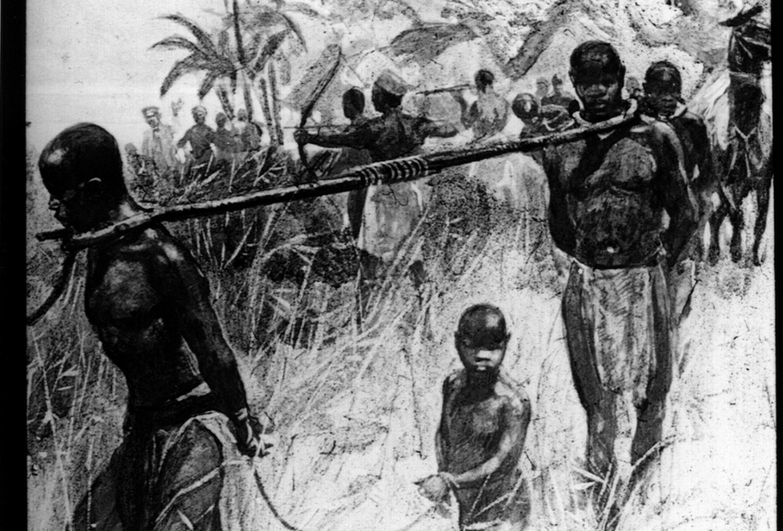
In 586 BCE the armies of Babylon the Great swept down from the north and sacked the city of Jerusalem, capital of the monarchy of Judah. The great wall which surrounded the city was breached and pulled to the ground. Both soldiers and civilians were put to the sword. Women were raped, children were beaten to death. The city’s religious and political elite - priests and courtiers - were shackled together and carted away into exile. And the two great symbols of Judah’s proud heritage - the twin towers of temple and palace - were desecrated entirely, and torn to the ground.

Imagine, for a moment, that you are a prosperous citizen of this great city. You have become accustomed to thinking of yourself and your fellow-citizens as the chosen ones of God, the nation rescued by God from slavery in order to become the light of the world. You believe that the temple and its priests are hallowed and holy, the sacred conduits by which God addresses and blesses the people. You believe that the king is heir to a messianic promise: that he is the anointed of God, who will always be there to protect the city from her enemies. Consider, then, the horror you feel as the Babylonian armies gather in the valley below. Imagine your shock and disbelief as the walls are breached and your countrymen put to the sword, as the priests, the king, and the noble families are carried off in chains. Imagine, if you will, the howl of despair that begins in your gut as the chosen people of God, with their noble law and their liturgy, are returned to the slavery from which they came. Imagine being that citizen who is left behind in the rubble, amidst the ruin of a disgraced city, the citizen who speaks in these opening words from Lamentations:

How lonely sits the city that once was full of people! How like a widow she has become, she that was great among the nations!She that was a princess among the provinces has become a vassal . . .The roads to Zion mourn, for no one comes to the festivals; all her gates are desolate, her priests groan;her young girls grieve and her lot is bitter.
Consider your bitterness and the overwhelming swell of your vengeance as one of those taken to Babylon, as one asked to sing a song of Hebrew worship for the entertainment of your captors. Today's psalm reflects on exactly that circumstance:

By the rivers of Babylon, there we sat down and wept when we remembered Zion. On the willows there we hung our harps . . .How could we sing the Lord's song in a foreign land? . . . O daughter Babylon, you devastator! Happy shall they be who pay you back what you have done to us! Happy shall they be who take your little ones and dash them against the rock!
Consider the swirling blackness of your desolation. The shock. The loss. The utter destruction of the dream which was Judah. The words of Lamentations are devastating:

I am one who has seen affliction under the rod of God's wrath; he has driven and brought me into darkness without any light . . .he has besieged and enveloped me with bitterness and tribulation; he has made me sit in darkness like the dead of long ago.
What does one do when such a thing has happened: when the illusion of safety and prosperity has been shown to be just that - an illusion; when that sense of election to a sacred mission and destiny has been shattered, and the God who promised to protect seem suddenly to have become the enemy?

Well, one wonders if these are the kinds of questions which the Americans are asking themselves these days. And not only the Americans, but anyone who, before Sept 11, 2001, saw themselves immune to the terrors of the 6 o’clock news; or who saw the Western project of civilization as somehow ordained and supported by God. Isn’t it curious how God is always on one’s own side, rather than on the side of those ‘others’, those people of different language, culture and belief. Isn’t it curious how the God of universal justice becomes, in the imagination of a threatened people, a warrior god (with a small ‘g’) who takes our side in battle of our tribe against theirs? . . . But I am getting ahead of myself. The question I really wanted to ask today was this: When the world has fallen apart and the foundations of safety and certainty have been shaken, how should the person of faith respond? Hear that again: how should the person of faith respond?

Well, there are a number of options, really. And we have seen all of them in the last few years. But they are also there in the Scriptures, as the people of faith in an ancient culture reflected on a similar question to ours.

The first kind of response one can make when the world has fallen apart, is to go looking for someone to punish. Here one feels that someone else is responsible for what has happened, and justice demands that they be punished in proportion to the damage they have inflicted. You know, ‘an eye for an eye and a tooth for a tooth’. Now, let us not underestimate the incredible power of this response, the emotional and, yes, spiritual energy that underlies its pervasiveness in human experience. You see, the desire for revenge actually finds its genesis in a genuinely religious impulse - the instinct for justice. ‘If God is just’, the argument goes, ‘then what has happened to me must be paid for. The guilty must, themselves, receive the wounds they have inflicted upon the innocent. Only then will justice be satisfied’. The impulse for justice stands behind many of the vengeful outbursts we find in our Scriptures, including those lines of terror found in Psalm 137:
O daughter Babylon, you devastator, happy shall they be who pay you back what you have done to us! Happy shall they be who take your little ones and dash them against the rock! 
Why would an Islamic man hijack an airplane and crash it into a building full of people? Why would he blow himself up in a Bali nightclub? Because he is driven by the religious impulse for justice that is deeply embedded in all the Abrahamic religions, including Christianity. ‘The Christians have killed and oppressed my people for decades’, he says to himself, ‘and so I will make myself the instrument of God’s justice. I will kill and terrorise the Christians’. Now, before I move on, I simply want to acknowledge the sheer power of this logic for every human being. When, as a child, someone hits or teases you in the playground, you feel hurt, you feel wronged. And it is our instinct for justice— the eye for the eye— that motivates us to respond in kind. Who of us can really say that if our own children were maimed or abused, we would not feel the same as the Psalmist? There is truth in these lines, even if it is an uncomfortable truth for civilized, urbane, people to countenance.

A second response that one might make when the world has been shattered is that of a fall into sheer despair. The kind of despair which, again, we find in the words of the Lamentations:

My soul is bereft of peace; I have forgotten what happiness is; So I say, ‘Gone is my glory, and all that I had hoped for from the Lord’. The thought of my affliction and my homelessness is wormwood and gall! My soul cannot escape these thoughts and is bowed down within me.
Anyone who suffers from depression, or anyone who has experienced a significant bereavement, will know this feeling all too well. It is what the Desert Fathers called acidie or ‘the noonday demon’. A sense that creeps up upon you, even in the noonday of one’s powers, at the apex of one’s ‘success’ in life, with a troubling question: ‘What is all this worth, anyway. So, you’ve achieved things, you’ve done a good turn for another, you’ve penetrated some of the mysteries of life. SO WHAT! What does it really matter? Everything passes away, like sands through your grasping hand. And there IS NO GOD who holds and values all this in his own hand and heart. It’s just an empty universe. In the end, there is nothing! So why bother?’

When the foundations are destroyed— whether by terrorists, or by legitimate governments (as in the case of Aboriginal people in this country) or by the simple bereavements of everyday life—it is sometimes very, very difficult to see what the value of building them was all about in the first place. And so one loses the will for anything, and slips into despair. Now. Again I want to acknowledge the sheer humanity of his response. The noonday demon is visited on every human being, without care for religion, social standing or race. No-one is immune, not even those who wrote the sacred words of Scripture. The noon-day demon is part of our experience. And the Scriptures acknowledge that with a startling realism.

But there is a third option for people of faith when their worlds have been shattered. And that is the option which is hidden in that very designation: the option we call ‘faith’. Now faith, according to the gospel of Luke, is a fundamental belief and trust in that which is impossible. It is to believe that a tree can uproot itself from the ground, take a walk, and replant itself elsewhere. It is to believe that the apparently ‘normal’ way of things, the logic of the everyday, work-a-day world can be fundamentally interrupted by a power which regards such things as far from necessary. It is the power that we call “God”, or “Grace”. Faith believes that the impossible is possible, that the unthinkable is thinkable, that the power of love is stronger than the power of death.

Now, listen to me, because this is important. Faith does not accomplish this belief by simply denying those other two desires we spoke of earlier, the desire for justice and the fall into despair. No. Faith has never been about taking us out of either the world or the bodies which we inhabit as human beings. It has never been about our escaping, about fantasizing ourselves beyond the troubles we encounter in the midst of life. Anyone who takes that particular path is kidding themselves. Faith, rather, acknowledges the power of those two experiences but takes them in a different direction. Faith identifies in both vengefulness and despair a kind of holiness, a seed of the good and the hopeful, and taking that seed into its care, waters and nurtures the seed until it is grown to a joyful maturity.

Let me explain what I mean. Faith recognises within the desire for vengefulness the holy seed which is a longing for justice. But faith finds another way for justice to be fulfilled. Rather than gathering all its power for a retaliatory strike, faith gives its power into the hands of another power. The power of God. Faith recognises that there is no-one who is righteous, not even one; so that when someone attacks me, my desire for just retaliation will inevitably be clouded my own sin, my own impurity of heart, by the limits of my own vision. So that were I to respond in kind, another kind of injustice would be accomplished. Evil would be added to evil, and the kind of justice I long for would certainly not be accomplished. In the words of Matthew Arnold, there is no justice when all the combatants are soiled by evil. Faith, therefore, longs for something which is impossible, and recognises that the only one who may fulfil that longing is God. A God of love and clear vision who may be trusted to interrupt the logic of revenge and bring peace. Faith believes that the way to tackle terror is to resist it with another kind of logic altogether. “Love your enemies and pray for those who persecute you”, said Jesus. Why? Because only God knows how to accomplish the justice we long for.

Similarly with the experience of despair. Faith recognises that there is a holy seed even in this experience. When we come to the end of our powers, when our achievements have been destroyed or seem useless in the grand scheme of things, faith gently reminds us that the life of joy and peace for all is built not by ourselves, but by God. Even death and despair are the angels of God. They come to teach us that unless the Lord builds the house, the building will not stand. That unless we empty ourselves of all ambition and desire, the desires and ambitions of God will never find the necessary space in our hearts to take root and grow. In one of the most pervasive religious narratives of our time, the Star Wars films, the Force is unable to do its work unless the Jedi knight disciplines his own anxieties and desires. The Force will not flow unless the Jedi lets go of both his fears and his desires. All that is self and ego must be surrendered so that the will of the Force may be done. Now, this is more that just science-fiction. The makers of Star Wars nicked this insight from the great religious traditions of the world, Christianity included. The mystics, the writer of Luke included, teach us that we are servants of a power which is not our own. That we must do what is proper to servants, the will of our master, no more and no less. And that means letting go and letting God. For, in the end, it is only the soul which acts in concert with God who will survive and prosper.

The good news of the gospel is this. When the world falls apart and the foundations are shaken, God cares. God recognises the pain, the despair, and the anger which goes with that experience. And God does not leave us on our own. God reaches down into our confusion and gifts us with faith—a belief that the inevitable is not inevitable, and that the impossible is indeed possible. That when our own powers are at and end, and when we are not competent even to do justice, that God’s power of love will yet prevail, that God will accomplish the justice and the peace we long for. If only we will surrender. If only we will have faith.

Sunday, 19 September 2010

How to serve God with your ill-gotten wealth

Luke 16.1-13

So here’s the perplexing story we’re confronted with this morning.  Jesus tells of a clerical type who works for a credit agency, a bank we might say, who is about to lose his job because the owner looks into his work and finds that he’s been a bit slack and idle with calling in the debts.  The fellow says to himself, “Damn, I’m about to lose my job!  That means that I could be out on the streets begging.  I’m not rough enough for a labouring job.  What can I do?”  Well, what he does is make himself some ‘friends’, that is, some people who will owe him big-time, so that when he’s retrenched, he’ll at least be able to find a place to stay for a while.  So he calls in the boss’s debtors, one by one, and reduces their debts by up to a half.  He gets them to pay what they can, but makes it clear that they’re not really off the hook because they now owe HIM.  Now, the funny thing is that when boss hears about this, he commends the fellow for his shrewdness, and our clerical type gets to keep his job after all.

A strange story indeed, a story that is very modern in some ways because no matter how hard you look, there is not a hero to be found anywhere!  The clerical type acts only to look after number one.  There is no trace in the story of any genuine altruism.  He reduces the debts to his boss only to make the customers indebted to him.  And the boss himself is clearly no saint, because he commends his employee for acting in that way.  Probably because that was how the boss made his own millions!  The rules of the game in the ancient world were much the same as they are in some circles even today.  In order to make new, more lucrative, business partners you sometimes have to rip off an existing business partner.  Like the Australian government did with the French over the sub-marine deal. So perhaps the boss was commending the fellow because he was finally part of the wealth-creation club, having now discovered the cruel rules of capitalism, in all their naked ignominy.

Now, you can probably imagine Jesus telling this story as a bit of an object-lesson in how evil the evil can get, right?  But that’s not what Jesus does with the story.  Quite the opposite.  There is a sense in which Jesus then commends the shrewdness of the dishonest money-lender to his disciples as a modus-operandi for their own lives.  Let me quote:
The children of this age are more shrewd in dealing with their own generation than are the children of light.  So I tell you, make friends for yourselves by means of dishonest wealth so that when it is gone, they may welcome you into the tents of eternity.
Now what, in heaven’s name, is that all about?  Is Jesus telling his disciples to make wealth dishonestly, that is, by ripping people off?  And is he also telling them to spend that money in such a way that even heaven will owe them something in the end?  Isn’t Jesus therefore recommending a course of action which actually contradicts the example of radical grace and generosity at the heart of his teaching?  It certainly looks that way!  But before we come to any too-quickly gained judgements, let us consider two other pieces of additional evidence from the ancient Mediterranean world.

First, you need to know that there were two very different views of wealth in the ancient Far-West, the world in which both Jesus and Luke, who is telling this story, lived.  One view was that wealth was a reward from the gods for the living of a virtuous life.  It is a view that was popular amongst the Romans who ruled this world, and because the Romans were imposing their culture upon the rest of the world, it was a view that began to take hold even amongst Jewish and Christian people.  There are churches, even today, who believe this.  Prominently, many Pentecostals.  But I can assure you that this was definitely NOT the view of Jesus, nor of most of his compatriots in the rural towns of Galilee.  This community tended to see wealth as a sign not of virtue, but of sin.  From where they sat, in the agricultural and fishing industries, wealth was something that the powerful fellows who bought your goods extracted from your hard labour by playing your own price off against someone else’s.  Wealth, in other words, was gained through the exploitation of indentured labour and by clever manipulation of the market.  From the point of view of the rural periphery, from the point of view of Jesus, wealth was therefore a sign that you were dishonest and that you served not Yahweh, but Mammon or wealth.

That Jesus in fact saw things this way, himself, is made clear by the final set of sayings in our gospel reading today, in which he makes it quite clear that the disciple must choose between the service of God or the service of Mammon.  Mammon is an Aramaic word which means dishonest wealth.  If you really love God, says Jesus, you must also hate or despise that wealth which comes (necessarily, in this view) by dishonest and exploitative means.  And you must redistribute any such wealth that comes your way to the ‘children of the light’, those who already have a place in heaven because they can depend on nothing else but God’s mercy and favour.

You can perhaps see, if you have not seen it before, where Karl Marx learned his economics!

But here’s the other relevant information.  You must remember that the story we are hearing this morning is not, first of all, a word-for-word recollection of the story told by Jesus.  It is, rather, part of a sermon Luke the evangelist is delivering to his congregation.  Now, if you read Luke’s gospel carefully you will find that Luke’s congregation is probably urban, probably Gentile in its culture, and that there are a number of very wealthy people in the congregation.  It may be that the church even meets in one of those wealthy person’s houses.  When Luke re-tells this story of Jesus, he is therefore doing it for a reason.  Perhaps to advise the wealthy converts to the faith—who, in Luke’s view could not have become wealthy unless they had been prepared to exploit others—what to now do with the wealth they have.  Perhaps Luke is saying, “O.K., so you live in the world, you do business with others and that means ripping someone off at some point.  Just like the shrewd manager who ripped off his boss in order to serve his own business interests.  I recognise that you can’t leave the world entirely.  I recognise that if you want to stay in business, you have to struggle with difficult rules and shonky arrangements sometimes.  I understand that.  Nevertheless, in all of this I want you to be shrewd.  I want you to use the ingenuity you formerly used to rip people off in another way.  I want you to find ways of using your Mammon, your dishonestly gained wealth, to help out the the poor and the widows and the orphans.  For here they sit amongst you.  Make friends with them, these 'children of light', not in order to make them indebted to you, but because they need your help.  The injustice they have suffered needs to be redressed.”

So, how are we to receive this sermon for ourselves?  Well, it’s not too difficult really.  There is a sense in which all of us, simply because of where we live, benefit from dishonest gains. A couple of pertinent examples. First, I take it as uncontroversial that anyone who has settled in this land having migrated from another, benefits on a daily basis from the genocidal policies of the British Crown in its annexation of Indigenous lands. Whether we’re comfortable with the fact or not, all immigrants to this place are economic beneficiaries of colonialism. Second, in world-economics terms, living in a First-World economy means, by definition, benefitting from the unjust market conditions and terms of trade which keep most of the world poor.  In simple terms, we enrich ourselves off the back of cheap manufacturing and indentured labour in other parts of the world, all of it made possible through the ecologically unsustainable harvesting of natural resources. 

Now, obviously, there’s a sense in which we cannot change that overnight.  Thousands have tried, and failed. And getting all high-and-mighty in the annual meetings of multi-nationals or the World Bank, or whatever, is unlikely to achieve a revolution.  Let’s face it.  But there are still things you can do to right the wrongs.  You can use the relative power of your position to make yourself the friend of those who have little power, those most beloved of God, those who are the true 'children of light'.  Be shrewd.

I have a friend who used to work in a paint supplies outlet in Collingwood.  The boss would put the same product in different containers and sell one at a much higher price than the other.  But my friend, if a customer came in who was clearly not made of money, would always recommend the lower-priced package and get away with it, because there was a loop-hole in the ordering system which didn’t distinguish between the two.  I have another friend who works for one of the world’s worst corporate citizens, BHP-Biliton.  But she is there because she wants to make a difference for the poorer people of the world.  In the boardroom meetings, she tries to convince the company that paying the workers fairer wages will make good economic sense in the end because a happy worker is a loyal and hard-working worker.  She usually loses, but sometimes she wins.  And she redistributes some of the big cash she earns to a poor community in Indonesia.  

What Jesus would say to all the prosperous this morning is this, I think.  If you are faithful in doing what you can with the Mammon, the ill-gotten wealth, you all receive whether you intend to or not, then God will entrust the real, less illusory riches of life to you as well.  If you can learn to redistribute your wealth and power towards God’s poor and vulnerable one’s, even though it is personally costly to do so, then God will entrust you with the joy and the peace that comes to a person when you give, but require nothing in return.  For this is what Christ did.  He took the power that was his as a merchant-class male Rabbi in a society which privileged such people, and he gave it away for the sake of those whom that society excluded.  Not in a silly, head-strong way.  But carefully, and shrewdly, so that his small, incremental, efforts would actually make a difference.

God calls all of us to do the same.  Perhaps, I would humbly suggest, by first considering those from whom our wealth was dishonestly extracted in the first place.

Garry Worete Deverell

Sunday, 12 September 2010

God who searches the Wasteland

Texts: Jeremiah 4.11-12, 22-28; Psalm 14; 1 Timothy 1.12-17; Luke 15. 1-10

Midway this way of life we're bound upon
I woke to find myself in a dark wood,
where the right road was wholly lost or gone.

So begins Dante's great story of the soul's journey towards God, The Divine Comedy. And it continues, a few stanzas later, with this:

How I got into it I cannot say,
because I was so heavy and full of sleep
when first I stumbled from the narrow way.

Dante is certainly not the only person in the history of the world to have woken to find themselves in a strange and unfamiliar place. It is so with many of us. To all intents and purposes, life seems well enough. 'Well' in the sense of 'can't complain'. 'Well' in the sense of 'comfortable'. 'Well' in the sense of 'uneventful'. But these are adjectives which betray a terrible forgetfulness. A forgetfulness about the call to follow Jesus. A forgetfulness about the possibility of pain and risk on mission with God. A forgetfulness about the ecstatic moments of joy and celebration in the embrace of God's love. Forgetfulness is like being asleep. In sleep we dream of the life unlived, the heroic life filled with daring and courage for the sake of love. But it remains a secret. Only very rarely is it made real.


Dante awoke from his slumbers to find himself in a very scary place, an unfamiliar wood. He was lost. Have you ever felt like a stranger in your own life? Have you ever woken up and asked 'how on earth did I get here?' 'Here' is not a place, of course, but the life we're living. Suddenly the truth hits us, and we can see our life for what it is: unreal, a lie, a wasteland of lies. We begin to question the value of everything we've ever done, the purposefulness in what we've slaved so hard to become. Have any of you seen the Scottish film called Trainspotting? It's about a group of heroin addicts who party their way through the most appalling lives imaginable. As the film's observers, we can see their lives are a waste. But they can't see that themselves. They just keep on trashing themselves and their friends and their families for the sake of that little rush of heaven called heroin, all the while pretending that life is grand. But there comes a wake-up call about half-way through the film. One of the girls has a baby, but she's neglected the little fellow awfully. One afternoon she wakes up after a particularly crazed trip to find her child dead. He's simply died from neglect and starvation. The scene is one of the most harrowing I have ever seen. She wails and wails and wails, and her partners in crime are shaken to the very core with shame. Suddenly they are confronted with the truth they've made: their lives are garbage, a wasteland of garbage.

The prophet knew about rubbish lives. He announced the fact to the people of Jerusalem around 600 BCE. They'd forgotten about God. They'd forgotten about love and care for one another. They'd gotten into ripping each other off for the sake of making money and becoming powerful. But Jeremiah declares the truth in a devastating picture of the fruitful land gone to desert:

I looked to the earth, and lo, it was waste and void;
and to the heavens and they had no light.
I looked on the mountains, and lo, they were quaking,
and all the hills moved to and fro.
I looked, and lo, there was no-one at all,
and all the birds of the air had fled.
I looked, and lo, the fruitful land was a desert,
and all its cities were laid in ruins before the Lord,
before his fierce anger.

These images are not just about the coming historical disaster known as the exile, when the noble classes of Jerusalem would be captured and taken to Babylon. More primally, they are about the condition of the people's hearts and souls. Their souls are a wasteland, made desolate through greed and that numbing forgetfulness about God and the ways which bring life. When you awake to a wasteland of your own making - as Dante did, as the Hebrew nobility did, as the apostle Paul did - life can become very scary indeed.

For many, that is where life effectively ends. Some try to run from the wasteland by denying its existence. By blowing their life savings on a hedonistic trip.  Or having an affair.  Or buying a red sports car. Or drinking themselves back into the stupor from which they came. For others, the wasteland is just so terrifying that they take their own lives. I guess that's how it was for Kurt Cobain, idol to millions of disaffected kids all over the world. Shortly before killing himself with sleeping pills, he penned the words 'Jesus don't want me for a sunbeam, Jesus don't want me at all'. Either way, the sense of waste remains because you can never escape from yourself.

Ursula Le Guin tells the story of a young wizard named Ged who gets too big for his boots by trying a spell which is way beyond his years to control. The spell goes wrong and Ged succeeds only in releasing a shadow into the world which immediately begins pursuing Ged. The shadow is terrifying. It succeeds in stealing all the young wizard's zest for life, and weighs on him a heavy sense of shame and dread. The shadow pursues him to the edge of the world where the young wizard seeks the help of a dragon to defeat his foe. The dragon guides him toward a terrible truth. The shadow is his own self, a shocking externalization of Ged's own darkness and conceit! Running, he learns, will never effect an escape because you can't run from yourself!  In Le Guin's story, the dragon functions as the paragon of hope: a Christ figure who advises the young wizard to stop running and acknowledge his shame and guilt.

That's what Christ does for us, too. As in the parables we heard this morning, Christ is one who searches for us in the wastelands of our own making. We are like sheep who get lost on the mountain slopes, who turn aside from the narrow paths which the shepherd has forged for us. Yet the shepherd does not abandon such sheep to their foolishness. He leaves the ninety-nine more level-headed sheep, and searches for the lost one until he finds it. The apostle Paul reports that when he was lost in the wasteland of blasphemy and violence, 'the grace of our Lord overflowed for me with the faith and love that are in Christ Jesus'. Christ is the guide you will find in your own wilderness, too. The guide who reminds us that life is still possible. He appears in many forms: the shepherd, the peasant woman, the poet or the young lover (as in Dante's Comedy), but he is the same Christ. He is always there in the wasteland, because he represents the love of God for all who get lost, for all who lose their way to the garden of God. Remember, he knows the wasteland well. That is what Good Friday and Holy Saturday are all about: Christ's journey of solidarity into the wasteland of human misery and sin, there to share our shame for the sake of becoming our guide toward a new way, a way that leads to life in all its fullness.

Remember, though, that life in all its fullness - symbolized in the parable by the joy of heaven's angels - comes not only because of the guide's love, but also because of our own repentance. There are two sides to any rescue operation, are there not? You've heard the joke I'm sure: ‘How many psychologists does it take to change a lightbulb? Only one, but the lightbulb must want to change!’ So it is with the pilgrimage toward life. The guide may appear in the midst of the wasteland, calling our name and offering forgiveness. But unless we are willing to leave where we are and follow, we shall remain in our misery. The biblical word for wanting to change is 'repentance', which means, literally, turning right around and setting out in a radically new direction.

Perhaps you have woken in a strange place recently, a place that scares you to death. A place populated by demons and hobgoblins and terrible, nagging questions about the ultimate value of everything you've even been and done. If so, Jesus comes to you this morning and says, 'don't be afraid. You need to face the truth of your own life in order to be reborn. That will be painful. It will even mean putting to death the self you're accustomed to being. But don't worry. I will be here to guide you into resurrection. You are forgiven your sin and your foolishness. When you pass through the waters and the fires, I will be there. Trust me, listen to me, and together we will walk the path to your only true home . . . in the heart of God'.

Sunday, 29 August 2010

The Economics of Compassion

Texts: Jeremiah 2. 4-13; Psalm 81. 1, 10-16; Hebrews 13. 1-8, 15-16; Luke 14. 7-14

We hear a terrible lot about economics these days. A terrible lot. The daily output of our many media really is full, flowing over, indeed, with both the language and values of economics. There’s the Stock Market with its All Ordinaries Index and its Futures Index. There’s the National Economic Outlook, which tells us whether we ought to be happy or sad about life. Then there’s Interest Rates - our own and those in the United States - the tightening or untightening of Monetary and/or Fiscal policies. There’s the GDP, the GNP and the Current Account Deficit. There’s frequent reports on how much we’re paying per refugee. And all of this is reported to us, the citizens of Australia, on at least an hourly basis. It’s almost as if our lives depended on this stuff; indeed, for an increasing number of Australians, life and economic prosperity have become practically synonymous. The people most alive, we are told, the people most with it, the people who are really going somewhere in this life - they give their money to Colonial which, apparently, provides the fastest, the safest, the most responsibly managed ride to economic and financial nirvana.

It’s a curious thing, you know, how words change their meanings. Because economics hasn’t always been about the accumulation of private wealth. It hasn’t always been about getting rich off the back of someone else’s labour. Once upon a time, economics was about the way we shared this planet of ours. It was about the values of equilibrium and care: care of one’s neighbour, and care of the land on which we all depend. In fact, the word ‘economics’ is derived from a Greek word: ‘oikodome’, which means ‘household’. In the ancient world, economics was about the way in which a household constructed its life not only for its own ends, but also for the good of the community in which it participated. And in the hands of early Christian thinkers like Paul of Tarsus, oikodome because a potent symbol of the new life of peace and justice which Christ had come to build in the world. Paul calls his apostolic ministry a service to the oikodome of Christ (2 Cor 13.10), and reminds believers that they ought to treat one another according to the spirit of that same oikodome (Rom 14.19). Paul encourages each Christian to use their gifts, talents and personal resources to build one another up into the oikodome of Christ, a holy temple in which God is pleased to dwell (Eph 2.21, 22).

The values of Christ’s economy are spelled out for us in that wonderful passage we read from Hebrews earlier on. And we would do well to re-read that passage now, listening for the way in which the economics of Christ confronts the economics of our age.

Let mutual love continue. Do not neglect to show hospitality to strangers, for by doing that some have entertained angels without knowing it. Remember those who are in prison, as though you were in prison with them; those who are being tortured, as though you yourselves were being tortured. Let marriage be held in honour by all, and let the marriage bed be kept undefiled; for God will judge fornicators and adulterers. Keep your lives free from the love of money, and be content with what you have; for he has said, ‘I will never leave you or forsake you.’ So we can say with confidence,‘The Lord is my helper; I will not be afraid. What can anyone do to me?’ 
Remember your leaders, those who spoke the word of God to you; consider the outcome of their way of life, and imitate their faith. Jesus Christ is the same yesterday and today and for ever. Through him, then, let us continually offer a sacrifice of praise to God, that is, the fruit of lips that confess his name. Do not neglect to do good and to share what you have, for such sacrifices are pleasing to God.
For Christians, then, economics is certainly not about the accumulation of personal wealth. And it is not about keeping ourselves safe from the misfortunes which befall others. It is fundamentally about joining our fortunes to the fortunes of others. It’s about counting ourselves rich because of the infinite gift of God to us in the mystery of Christ, and out of that irreducible gift, choosing to give our own selves, body and soul, for the sake of the common wealth which Christ is building.

Of course, the economics of God’s commonwealth are seen most clearly in the career of Jesus. In Luke’s gospel we read of the time when he went to the house (oikos) of a local Jewish leader for a wedding party. It was the Sabbath Day, the day when Jews commemorated and anticipated the Shalom of God, that final rest for all who are burdened and heavy laden. For Jesus, the Sabbath provided the perfect symbolic backdrop for confronting the economics of his time, the details of which may be extracted from the story. 1st century Mediterranean economics operated according to what has been called a patron/ client system of relationships. Which meant that everybody was born to a station in life, a spot in the pecking order if you like; and the only way that one could hang on to that station was to gain and keep the favour of someone who was a little bit higher up the ladder. The more favours you did, the more likely you were to gain a stable and respectable patron. And the more respectable your patronage, the more chance you had of surviving with your dignity intact. Now the important thing to remember here is that the economics of Jesus’ world was an economics of exchange between people who were certainly not equal. The poorer person did his or her work in exchange for the favour of his or her betters. Much like modern-day India, really.

Now, how did Jesus regard this economics of exchange? Well, the answer is not so clear as we might think. To our modern ears, Jesus does not come across as entirely consistent in this story. You see, the first tip Jesus passes on to his fellow party-goers is how to make the most out of the patron/client system. ‘Sit in the lowliest place at a banquet’, says Jesus, ‘so that when you are invited to step up higher, all will see that your patron is granting you his favour’. In other words, don’t risk the disfavour of a patron by presuming too much! Now this advice clearly approves of the economics of exchange, or is at least resigned to it. There is nothing here which signifies a more radical economics. Even Luke’s invocation of humility as a moral virtue does little to shift the compliance of the story with the usual economics. It is a morality entirely consistent with patron/client exchange.

But in the second part of the story, the ground shifts, the earth moves, and we find ourselves in an entirely different orbit. Jesus now turns to the one who is giving the banquet, the one who functions as Jesus’ patron, and pulls the rug out from under his entire enterprise. ‘You ought not invite people to banquets in order to seek their favour’, he says. One ought not invite one’s patrons. ‘Indeed’, says Jesus, ‘you should not even invite potential clients, those from whom goods and services might be extracted in return for one’s own favour’. ‘When you are preparing a banquet,’ he says to this fellow (and I can see his jaw drop even now), ‘invite only the poor, the crippled, the lame, and the blind.’ In other words, invite only the ‘untouchables’, the very lowest echelon of society, those who are neither patrons nor clients, those for whom there is no economic status at all. Why? Because they could never repay you in a million years. They could never repay you in a million years . . . Can you feel the ground shift? Can you see the tear in those old wineskins? Here Jesus calls the whole system of patron and client into question. He rejects, utterly, the morality of a system whereby people are valued only insofar as they have something to exchange. Only insofar as they are willing to exploit and be exploited. Only insofar as they are able to reduce themselves to relations of usefulness. And he does so on the basis of what can only be called a vision of messianic justice: a strong belief in the patronage of God for all people, a radically different kind of patronage which is given freely and without condition of response. A patronage which gives even the ‘untouchable’ ones a sacred status as children of the Most High God.

It is only in the light of this second story that the first one begins to make some sense. Where the first story, on an initial reading at least, seems to cast Jesus as a simple supporter of the status quo, this second story forces us to read it otherwise. For we can now see what kind of humility Christ is calling us to. Not the humility which expects a return as part of the exchange of client and patron. Not the humility which is motivated by self-interest. We are called, rather, to a humility which takes the form of solidarity. A humility which joins our fortunes to others simply because they are loved of God, and for no other reason. Loved of God, and heirs of the gift which has no exchange-rate, and can never be repaid in a million years. This is a humility which radically transforms the economics by which we operate, from an economics of exchange to an economics of compassion.

You can see where I am going with this, can’t you! This year our Government again showed us that it is deeply committed to an economics of exchange, and knows almost nothing about the economics of compassion taught us by Christ. I submit to you that the basic reason why asylum-seekers who arrive by boat are being refused entry to Australia is simply this. That the rate of exchange is not deemed good enough; that, in the view of our government, these people are unlikely to return our investment in their livelihoods with a sufficiently high rate of interest. I could talk all day about the wrongs and rights of Australia’s approach to asylum seekers. I could rant and rave about the legality or illegality of what we do with regard to detention, for example. But I will not. Because at the heart of the controversy is this clear and decisive contradiction between the economics of exchange and the oikodome of compassion, a contradiction that we Christian’s are called to live out and draw attention to - to gossip, to preach, to work and to pray this contradiction with all the grace and compassion of Christ. It is this vocation that the former General Secretary of the World Council of Churches, Konrad Raiser, called us in an open letter a few years ago:

. . . the Gospel tells us that Jesus made the love for strangers and enemies a hallmark of the inclusive community of the children of God. In this, he followed the Old Testament tradition of receiving the stranger . . . “Christians are called to be with the oppressed, the persecuted, the marginalised and the excluded in their suffering, their struggles and their hopes. A ministry of accompaniment and advocacy with uprooted people upholds the principles of prophetic witness and service - diaconia. We cannot desert the 'needy', nor set boundaries to compassion.
In the economy of God, there are no boundaries to the welcome we, all of us, receive by the unconditional gift of God’s grace. So let us not set boundaries and conditions ourselves. Freely we have received. Freely let us give.

This homily was first preached at South Yarra Baptist Church in September 2001. 

Saturday, 21 August 2010

Choosing Christ's Peace

Texts: Hebrews 11.29-12.2; Luke 12.49-56

The following of Christ is not for people who are allergic to making choices. It is not for any who would rather keep their options permanently open, or for those of us who prefer to spread our allegiances around in order to keep things nice with important allies. For when Christ calls, he calls us to choose.

The sacred texts we read just now were written in the midst of a world that was, in many respects, just like the one that has arrived for us with the ascendency of George Bush’s America. The world was ruled by an imperial power, a power whose influence pervaded every sphere of life, whether that be political, economic, domestic or spiritual. Local cultural and religious organisations were tolerated, in the public sphere, so long as their aims and practices did not conflict with the agenda of Rome. Where local organisations did conflict with Rome, its members could be charged with both the political crime of sedition and the religious crime of blasphemy. For what Bush’s America leaves implicit, Rome put out there for all to see: that the accumulation and maintenance of absolute power is tantamount to making oneself into a god who requires both obedience and worship. In the world of first-century Rome, those arrested on suspicion of either sedition or blasphemy were often held for long periods without charge, questioned and even tortured without recourse to adequate legal representation, pushed through a show-trial, and then summarily executed. Ironically, or tragically (depending on your point of view), this whole system of intimidation and repression had a particular name in the first century: the pax romana, the ‘peace of Rome’.

It is impossible to comprehend the words of Jesus in the gospel we read just now, unless one understands that it was this ‘peace’, this pax romana, that Luke wanted to challenge and contest. From the point of view of the Evangelist, the peace offered by Rome was no peace at all. It was a false peace, an uneasy peace. It was a peace that demanded nothing less than the selling of one’s mind, soul and body to the invader. If one were to accept the pax romana, one would need to divest oneself of anything resembling an independent thought or will or action. Theologically, accepting the peace of Rome was tantamount to choosing Caesar, and all things Roman, as god.

For Christians, of course, this was impossible. For Christians are those who, having heard the call of Christ to follow, have freely and without compulsion chosen to give themselves over to Christ as Lord and God. For Christians, there is only one authority in heaven and earth, and that is Christ. Having been baptised into his death, we have died to the basic principles of this world, to its false forms of peace and justice, in order to look for a peace that is still to come. The peace to come, in Christian understanding, is the pax Christi, the peace of Christ. It is a cosmos in which people honour each other with a radical hospitality and unconditional love, very much after the manner of Christ himself. It is a peace in which the poor are no longer poor, and the rich no longer rich. It is a peace in which the colour of one’s skin and the accidents of one’s progress through life are no longer reduced to function as symbols of one’s worth (or lack of it). The peace of Christ is a peace that the world cannot generate for itself. It is the gift of God in Christ’s life, death and resurrection. It is a gift that Christians learn to receive and recognise only through the repeated discipline of immersing ourselves in the story of Christ’s faith, hope and love (that is, by prayer and worship in the Christian tradition). Furthermore, it is in the name of this peace that Christians take up the responsibility to resist the false ‘peace’ of the various empire-builders that appear, again and again, in human history.

When Christ speaks of bringing fire and a sword to the earth one must recognise, therefore, that this is not a sword or a fire that may in any way be compared to the fire or the sword of an imperial power. It is not, in any sense whatsoever, a ‘shock and awe’ campaign like that of Bush in Iraq, nor a kill-them-all-by-night campaign like that of Sharon in Palestine. No, the ‘sword’ that Christ brings is nothing other than his vulnerable humanity, his faith, his hope and his love. The fire he brings is nothing other than that kindled by his passionate care for the poor, the marginalised, and the victims. In a world such as that of Rome, or indeed of the emerging American empire, intangibles such as these are regarded as far more dangerous than any bomb, for they have the power to un-do or even destroy the fears and anxieties upon which all such regimes thrive and are founded.

Of course, the practise of Christ’s virtue is deeply costly for those of us who have the faith and courage to follow that way. As believers who look for a ‘better country’ than the one on offer in the here and now, we resist the values and practices of the here and now. And that, my friends, can be very dangerous. In the passage we read from earlier, the writer to the Hebrews notes that those who practise their faith in God’s coming peace are very often ridiculed, imprisoned, beaten up, exiled, tortured, or even killed. Just as Christ was, in fact. This is the baptism of which Christ speaks in Luke. The baptism into suffering and death at the hands of the powers-that-be for the sake of one’s hope that the whole world might be resurrected in love. One’s hope in such things can even divide families—those who long for something better from those who, whether because of fear or brainwashing, are content to ingratiate themselves towards the power of the imperium.

All of which leads me to ask a very old, but still very pertinent question. If the way of Christ is to resist the Imperial Power with prophetic perseverance and suffering love, why is it that church folk are still amongst the most prominent beneficiaries of the current world system? Why is it that church schools and educational institutions receive so much support from both public and private sectors, and why is it that church people are still amongst the most wealthy and successful members of the community?

Perhaps I may be so bold as to answer this way. Many church people continue to be successful because so many of us gave away the actual following of Jesus long ago. Perhaps as long ago as the Constantinian transformation of Christianity in the Roman Empire of the fourth century. A great many church people no longer resist the values of the imperium because they have chosen the benefits of capitulation to the present regime over the faith, hope and love of Christ toward a better country. I’m not sure that I can put it any more starkly than that.

Still, if that is what has occurred, then I weep for the church and I weep for the world. Because the values of the current world powers make only for misery, and on a terrifying scale. If, as the advertisers constantly tell us, the only people worth two crumpets in this world are white men and women of average intelligence, with large bank accounts, obscenely expensive cars, and beautifully sculptured bodies, then God help the rest of us! In a world with that kind of pecking order, the rest of us are reduced to irrelevance. The rest of us become fodder for an industry whose sole purpose and aim is to enrich the elites. Now, for the people who work the sweatshops of Asia and South America in order to, for example, create the uniforms of our Olympian athletes, that fact is clear and obvious. But for those of us who live middle-class lives here in the West, it is not so obvious. Unless, of course, one has read the stats on the alarming increases in our community of mental illness, substance addiction, paedophilia, family breakdown and suicide. Even then, one can always blame the victim. And that is what we usually do. Until we become victims ourselves. When that happens one sees, often for the first time, that we are all perpetrators and that we are all victims, duped into believing the usual propaganda about middle-class progress.

In times like these, it seems increasingly likely that Christians will have to adopt the ancient visage of the “fools” for Christ, those who resist the logic of the imperium to the point of great personal cost. If the elites continue to protect their interests as aggressively as they are doing in our present time, it may be necessary that many more Christians will have to reconcile themselves to being economically poor, or having low-status jobs, or not having jobs at all. In addition, many of us may have to get used to increased levels of mocking or patronisation. It is likely that, in times to come, our own lives, and those of the one’s we love, may actually be in danger. Yet, in all this, we are called to count our losses as nothing compared to the surpassing wonder of knowing Christ our Lord, who, having endured the cross and its shame, now imbues us, and all who follow him, with the promise of a world renewed. In the name of that faith, that hope, and that love, we are called to be happy in our resistance toward the inhumanity of Bush and Howard. For by doing just that, Christ himself comes to make the better country real. And that is enough for me. In that is our peace, and, I believe, the peace of the world.

Saturday, 22 August 2009

Liturgy Conferences in Sydney

I've just come back from some time in Sydney at two liturgy conferences. The first was the international meeting of Societas Liturgica. I stayed for three days, and that was enough for me. While I enjoyed catching up with friends and colleagues from overseas, I felt that we Australians squandered an opportunity to showcase our theological work on Christian worship. Most of the major papers were still looking at the conference theme - the church year - from the point of view of the northern hemisphere. Apart from an all-into-one presentation on the Wednesday, there was little Australian content.

The other thing that made this first conference deeply unattractive to me was the sheer amount of sitting around listening to academic papers. I found myself falling asleep from the sheer immobility of it all!

Thankfully, the second conference - a much smaller one - was really enjoyable. This one was based at the United Theological College in North Parramatta and the main speaker was Professor Gordon Lathrop. Gordon is one of the most thoughtful and generous liturgical theologians I know, and he did not disappoint across the five lectures he gave in four days. An American Lutheran, Gordon spoke comprehensively about both the place of the Gospels in the worshipping assembly and the place of the assembly in the Gospels. The lectures represented an initial work-out for materials that will eventually become part of Gordon's latest book.

The format of this conference, organised by the Rev Dr Robert McFarlane, allowed for plenty of active consideration of the papers presented by both Gordon and others. My own paper, 'New Wine and Old Wine Skins: the Traditioning of Worship' was well-received. Crucially, the conference also offered plenty of 'unscheduled' time for processing or for recreating.